
For years, the standard technology stack for growing trade businesses has been relatively simple: use a job management system to run the work, then add a CRM to manage leads.
That model made sense when the biggest problem was keeping sales opportunities organised.
It is becoming less effective now.
Modern trade and construction businesses are managing far more communication across the customer journey. Leads arrive through multiple channels. Quotes need to be followed up. Customers expect updates. Invoices need to be paid. Existing clients need to be nurtured long after a job is completed.
A CRM can manage contacts and opportunities.
What businesses increasingly need is something broader: a Workflow Operating System.
That is the direction LANA Software has evolved towards. As LANA puts it, “CRM is one component. The workflow is the vision.”
Your Job Management System Runs the Job
Platforms such as simPRO, ServiceM8, AroFlo and Ascora are incredibly useful for managing operational work.
They help businesses schedule jobs, allocate technicians, record job information and manage what happens in the field.
But that is only one part of the customer journey.
Before a job exists, someone has to capture the lead.
Someone needs to respond.
The opportunity may need nurturing.
A quote might need several follow-ups before the customer says yes.
Then, once the job is completed, there is still invoicing, payment follow-up, review requests, future servicing and ongoing marketing.
That entire communication layer is where a Workflow Operating System becomes important.
A CRM Manages Leads. A Workflow Operating System Manages the Journey
A traditional CRM is generally designed around contacts, opportunities and pipelines.
Those things still matter.
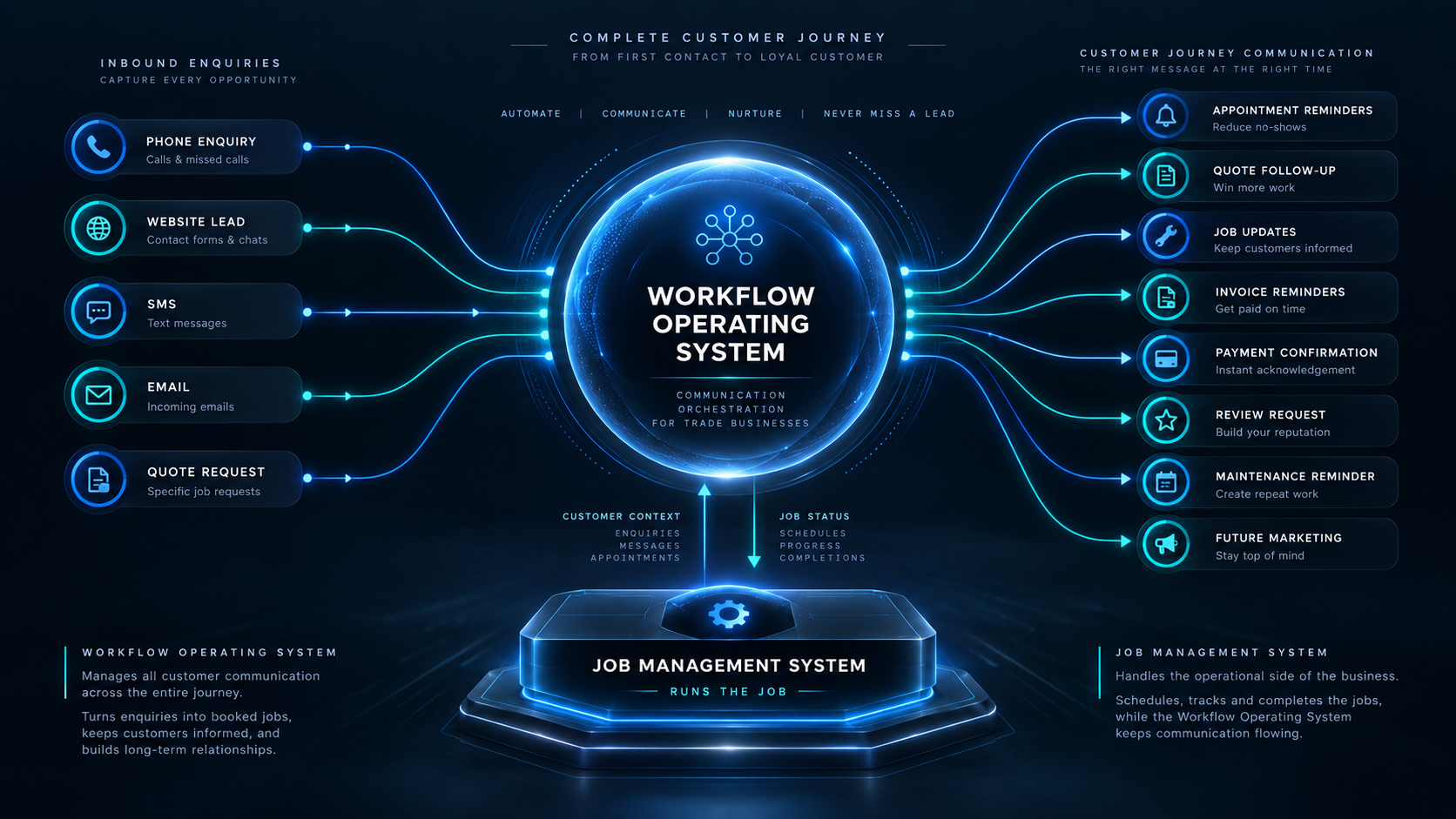
A Workflow Operating System keeps those capabilities but extends automation across far more of the business.
Think of it as the communication arm sitting alongside your job management system.
When a new lead enters the business, workflows can determine what happens next.
That could mean an immediate response, assigning the lead, booking an appointment, sending reminders or creating follow-up tasks.
Once a quote is issued, the workflow changes again.
If the customer hasn’t responded, follow-up can happen automatically. If they accept, the process moves forward. If they aren’t ready today, they don’t simply disappear from the business forever.
The workflow follows the customer.
Reactive and Proactive Workflows
One of the biggest differences is that a Workflow Operating System doesn’t only react to incoming enquiries.
It can also help the business proactively generate activity.
Reactive workflows might include responding to a new website lead, handling an inbound call, following up a quote or sending an appointment reminder.
Proactive workflows can re-engage past customers, promote additional services, remind clients about future maintenance or bring dormant opportunities back into the sales process.
That matters for electricians, plumbers, HVAC businesses, solar companies and other trades because growth doesn’t only come from buying more leads.
There is often significant opportunity already sitting inside the customer database.
From First Enquiry to Fully Paid Invoice
The real value comes from thinking beyond individual features.
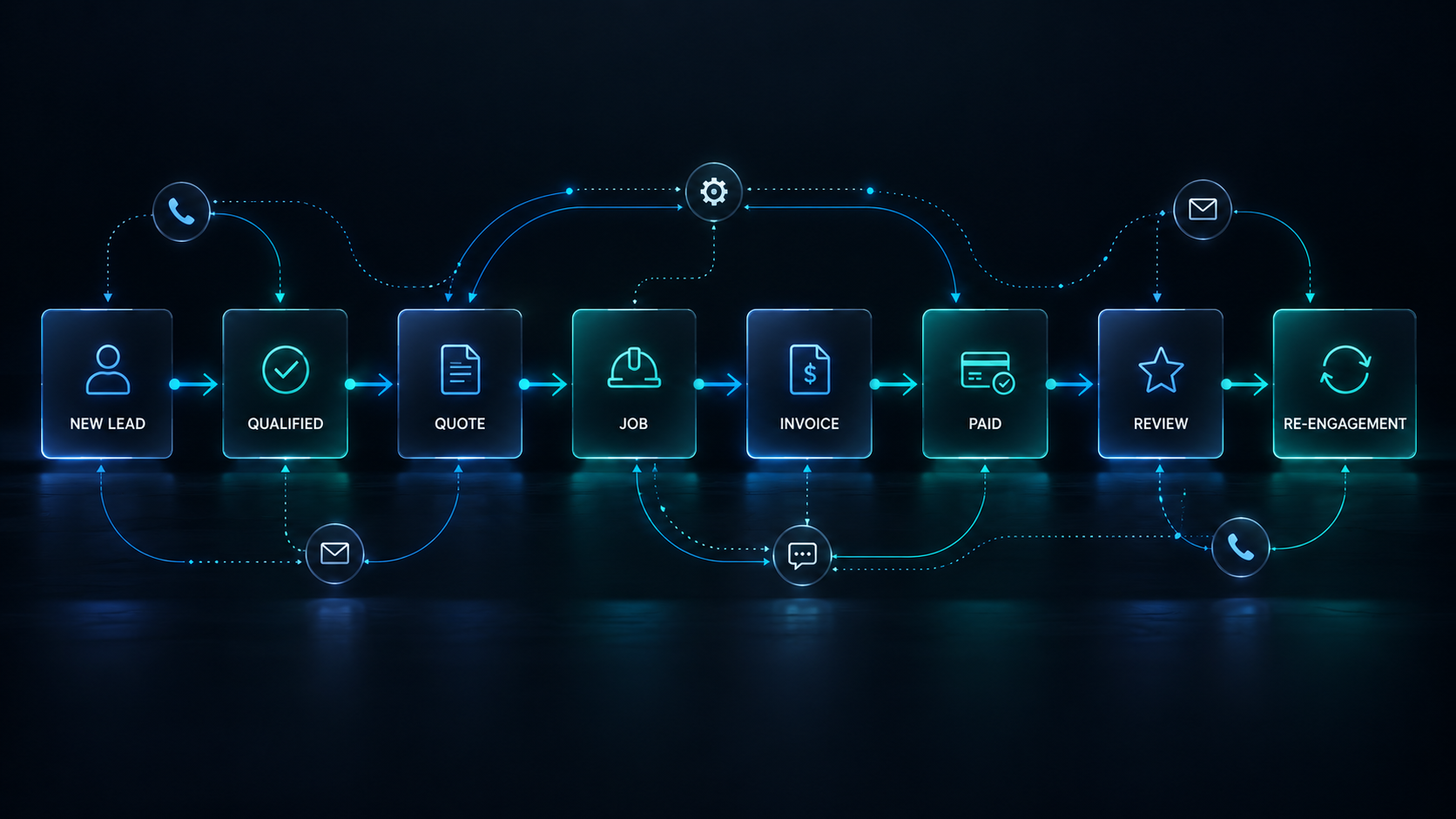
A Workflow Operating System can support communication from the moment someone becomes a lead until the point their invoice is fully paid.
The journey might include:
Lead capture → qualification → appointment → quote → follow-up → job → invoice → payment → review → ongoing marketing.
Instead of treating each stage as a separate administrative task, workflows connect them.
That creates consistency.
It also reduces reliance on staff remembering who needs to be called, which quote needs chasing or which customer should receive another message.
Keep Customers in Your Ecosystem
The customer journey shouldn’t necessarily end when the invoice is paid.
A completed customer is valuable.
They already know the business. They have experienced the service. They may need additional work in the future, recommend someone else or require recurring maintenance.
A Workflow Operating System allows businesses to continue communicating with those customers after the initial transaction.
That could involve review requests, service reminders, targeted campaigns or future offers relevant to the work already completed.
Instead of constantly starting from zero with customer acquisition, the business builds an ecosystem of previous, current and future clients.
CRM Is One Component. Workflow Is the Bigger Picture
LANA Software is evolving beyond the idea of simply being another CRM attached to a job management platform.
Its positioning is a Workflow Operating System for trades and construction: a layer designed to manage communication and automation across the broader customer journey.
Your job management system can continue doing what it does best: running jobs.
The Workflow Operating System handles what happens around them.
For growing trade businesses, that distinction is becoming increasingly important.
The next stage of business software isn’t simply storing more customer information.
It is building workflows that make sure something useful happens with it.
If you want to see how LANA Software can work alongside your existing job management system and automate more of the customer journey, book a demo or consultation.